Automation has become one of the most important drivers of progress in modern manufacturing. As production environments face higher quality demands, faster delivery expectations and increasing pressure to use resources efficiently, automated solutions help manufacturers create more stable, scalable and competitive operations.
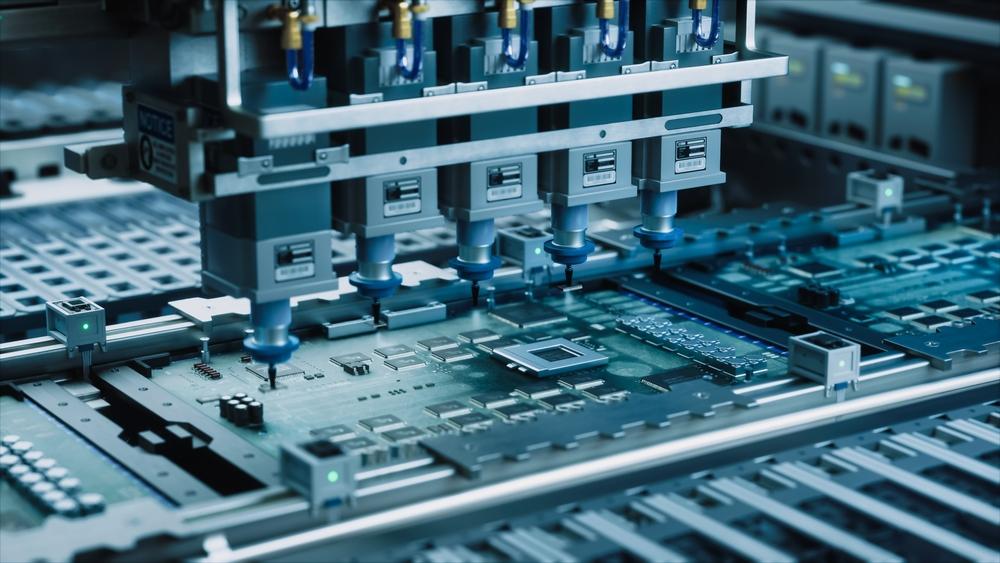
Automation creates a more reliable production flow
For many manufacturers, the strongest reason to invest in automation is reliability. Manual work will always involve variation, even in well managed production environments. Small differences in movement, timing, tightening, feeding or handling can affect quality, cycle time and repeatability. Automated systems reduce that variation by performing defined tasks in a controlled and consistent way.
This is especially important in assembly operations where precision is critical. Solutions from Atlas Copco ITBA show how automated tightening, feeding systems, robotic cells and control platforms can support manufacturers that need repeatable results across demanding production lines. When each operation follows a verified process, it becomes easier to maintain output quality and reduce costly interruptions.
A reliable production flow also makes planning easier. When cycle times are predictable and fewer manual adjustments are needed, production managers can schedule capacity with greater confidence. This does not remove the need for skilled people. Instead, it allows teams to focus on supervision, improvement, quality assurance and problem solving rather than repetitive tasks that are better suited to automation.
Higher quality through precision and traceability
Quality is one of the clearest benefits of automation in manufacturing. Automated systems can apply the same level of precision repeatedly, which is difficult to achieve through manual processes alone. In industries where every joint, screw, component or assembly step matters, this consistency has a direct effect on the final product.
Automation also strengthens traceability. When production steps are logged and monitored, manufacturers gain clearer insight into what has happened on the line. This makes it easier to identify deviations, investigate faults and support continuous improvement. Instead of relying only on end of line inspection, manufacturers can build quality control into the process itself.
Traceability is particularly valuable when products are complex, produced in multiple variants or manufactured across several sites. A well integrated automation system can help ensure that the correct process is followed for each product variant. It also supports documentation, which can be important for audits, customer requirements and internal quality standards.
Better productivity without compromising flexibility
Productivity is often associated with speed, but in manufacturing it is just as much about stability. A fast process that creates defects, downtime or rework is rarely efficient in practice. Automation helps manufacturers improve productivity by combining speed with controlled execution. The result is a smoother workflow where fewer resources are lost to errors, waiting time and repeated manual intervention.
Modern automation is also more flexible than many traditional systems. Modular automation platforms, robotic cells and configurable feeding solutions can be adapted to different applications and product variants. This is important because many manufacturers no longer produce only one standard item in high volume. They need systems that can support variation while still maintaining process control.
Flexible automation can also make it easier to scale production. A solution that works in one line can often be adapted for another line, another plant or another market. This gives manufacturers a more structured path from pilot testing to wider implementation. It also reduces the risk of creating isolated systems that are difficult to maintain or expand later.
Improved working conditions and smarter use of expertise
Automation is not only about machines. It also changes how people work. Repetitive, physically demanding or highly monotonous tasks can place unnecessary strain on operators. By automating selected parts of the process, manufacturers can improve ergonomics and reduce the burden of tasks that are tiring or difficult to perform consistently over long shifts.
This is increasingly important as many manufacturers struggle to recruit and retain skilled labor. Automation can help companies use their available expertise more effectively. Instead of relying on operators to perform the same repetitive action hundreds or thousands of times, teams can focus on managing equipment, improving processes, analyzing data and ensuring that production meets quality targets.
In this way, automation supports both operational performance and workforce development. It creates a production environment where human skill is used where it adds the most value, while automated systems handle tasks that demand constant repeatability, precision and endurance.
Long term competitiveness in modern manufacturing
The manufacturing industry is changing quickly. Customers expect high quality, shorter lead times and greater product variety. At the same time, companies must control costs, reduce waste and make better use of energy and materials. Automation helps manufacturers respond to these pressures with processes that are easier to measure, refine and scale.
Another important benefit is that automation supports continuous improvement. When data is collected from the production process, decisions can be based on facts rather than assumptions. Manufacturers can identify bottlenecks, compare performance between shifts or sites and improve processes step by step. Over time, this can create significant gains in efficiency and quality.
Automation also supports sustainability goals. More precise processes can reduce scrap, rework and unnecessary resource use. Better process control can also help avoid overproduction and improve energy efficiency. While automation is not a complete sustainability strategy on its own, it can be an important part of building more efficient industrial operations.
For manufacturers planning future investments, the key is to view automation as a strategic tool rather than a single technical upgrade. The greatest value often comes when automation is connected to clear business goals, such as improving quality, reducing downtime, increasing capacity or preparing for new product variants. With the right planning, automation solutions can strengthen both daily production and long term competitiveness.